
Consero 2026: Reducing CX Costs Without Compromising Quality
minutes
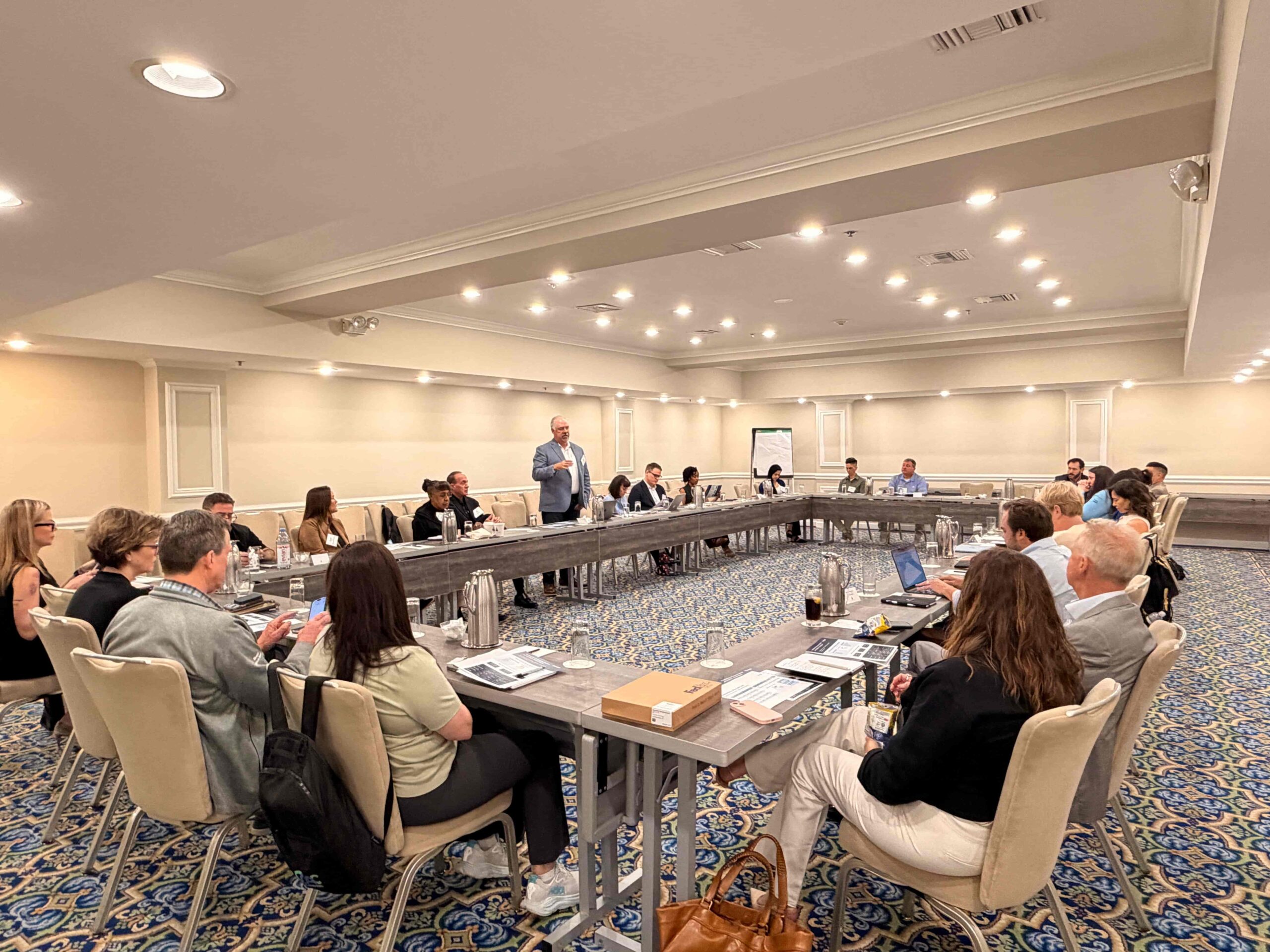
The Customer Experience & Contact Center Forum at The Biltmore in Coral Gables, Florida, brought together senior CX leaders for three days of focused conversations on one of the industry’s biggest challenges: how to control operational costs while maintaining high-quality customer interactions.
From March 9-11, 2026, executives, contact center leaders, and technology innovators gathered to exchange practical strategies, share operational insights, and explore how modern CX organizations can adapt to increasing complexity.
Across panels, breakouts, and peer discussions, a consistent theme emerged: cost efficiency and customer experience are no longer competing priorities. The most successful organizations are finding ways to achieve both by rethinking workforce models, operational flexibility, and the true cost structure behind customer service delivery.
A Practical Playbook to Reduce CX Costs by 40%
One of the highlights of the forum was the Knowledge Bridge session led by Liveops leaders Jay Arthur and Bill Trocano, titled:
“A Practical Playbook to Reduce CX Costs by 40%.”
The interactive session focused on a critical but often misunderstood concept in customer service operations: Total Cost of Ownership (TCO).
Many CX teams still compare vendors or operational models primarily by hourly rates. However, the session explored why hourly pricing rarely tells the full story of what organizations are truly spending to support customers.
Instead, the discussion centered on the hidden cost drivers that quietly inflate customer service budgets, including:
- Idle or non-productive time
- Overtime spikes caused by staffing mismatches
- Attrition and retraining costs
- Facilities and operational overhead
- Repeat contacts driven by quality gaps
When these factors are accounted for, the true cost per interaction often looks very different than what traditional rate-card comparisons suggest.
If you want to better understand the hidden factors impacting your customer service costs, our Total Cost of Ownership whitepaper breaks it down in detail.
Understanding the Real Drivers of CX Costs
During the session, participants examined the operational realities that influence cost structure across contact centers.
One of the most impactful drivers discussed was shrinkage and paid non-productive time, which can account for a significant portion of operational spending without directly contributing to customer outcomes.
Leaders also shared experiences around the “forecast error tax,” the cost that arises when staffing levels do not align closely with real customer demand. Overstaffing creates idle capacity, while understaffing leads to overtime costs and service delays.
Other cost pressures frequently surfaced during the conversation, including:
- High attrition rates that increase recruiting and onboarding expenses
- Fixed facility costs that remain constant even when volume fluctuates
- Operational support layers such as IT, management, and quality assurance
When combined, these hidden drivers can substantially impact the total cost of customer experience operations, even when headline labor rates appear competitive.
Choosing the Right Delivery Strategy
Another key discussion point explored how geographic delivery models influence total cost of ownership.
Rather than defaulting to a single sourcing strategy, leaders discussed how organizations are increasingly applying different delivery models to different types of customer interactions.
The session outlined a practical framework for aligning delivery models with the nature of the work:
- Onshore support for complex or compliance-heavy interactions
- Nearshore teams for bilingual support and time-zone alignment
- Offshore operations for high-volume, transactional requests
- Hybrid delivery models that blend these approaches to balance cost, experience, and operational risk
Attendees noted that the most resilient CX organizations are moving toward blended global strategies, allowing them to optimize for both efficiency and service quality.
Modeling CX Economics with an ROI Lens
A major portion of the session walked attendees through a practical framework for evaluating CX operations using a Total Cost of Ownership and ROI modeling approach.
The Liveops ROI calculator served as a guide for demonstrating how organizations can analyze their current cost structure and identify opportunities to improve efficiency.
The framework included evaluating categories such as:
- Productive versus paid time
- Overtime and surge capacity planning
- Recruiting and attrition costs
- Facilities and equipment overhead
- Operational support layers and technology requirements
By modeling these factors together, leaders can develop a finance-ready business case for operational changes, helping align CX strategy with broader organizational priorities.
Key Takeaways from the Session
As the discussion wrapped up, several practical insights stood out for CX leaders planning their operations for the coming year:
A lower hourly rate does not always mean a lower total cost.
When hidden cost drivers are considered, the cheapest option on paper may actually create higher operational expenses.
Delivery strategy should match the interaction type.
Different types of customer interactions require different levels of expertise, empathy, and operational complexity.
Flexibility improves operational efficiency.
Workforce models that align capacity with real demand can significantly reduce idle time, overtime, and operational waste.
These insights reinforced a central theme of the forum: cost discipline and customer experience improvement can move forward together when organizations adopt smarter operating models.
Conversations Beyond the Session
Beyond formal presentations, the event also provided valuable opportunities for peer discussion and collaboration.
Throughout the forum, CX leaders exchanged ideas on topics such as:
- Preparing for seasonal demand spikes
- Managing AI adoption alongside human expertise
- Improving forecasting accuracy
- Maintaining service quality during operational scaling
These conversations highlighted how the contact center continues to evolve from a cost center into a strategic driver of customer relationships and brand trust.
Why This Matters for CX Leaders
Customer expectations continue to rise while operational pressures increase. Organizations are expected to deliver fast, empathetic support while managing budgets and preparing for rapid change.
Events like the Consero forum provide an opportunity for leaders to step back from day-to-day operations and explore new approaches to workforce strategy, cost management, and CX innovation.
The takeaway from Miami was clear: the future of customer service will be shaped by organizations that understand their true cost structure and build operations designed for flexibility.
Looking Ahead
Liveops works with enterprise brands to help them rethink how customer support is delivered, aligning capacity with demand, reducing unnecessary operational costs, and maintaining high-quality customer interactions across regions.
If your organization is evaluating how to scale support more efficiently while protecting customer experience, we welcome the conversation.
Speak with our team to learn more about building smarter, more flexible CX operations.


Let’s connect
Sales reps are available to help you meet your customer service needs with greater flexibility, lower cost, and better outcomes.
Related Resources

Why Bilingual Customer Service Jobs Are One of the Fastest-Growing Opportunities Today →

Human-First CX in a Tech-First World →

When and How Energy Providers Should Scale Operations →
Stop outsourcing, start outsmarting
Join the brands redefining customer experience with Liveops. Empathetic agents, tech-powered delivery, and the flexibility to meet every moment. Let’s talk.

Explore flexible customer experience solutions