

Are you looking to become a customer service agent?

It’s not outsourcing,
it’s outsmarting
Customer service doesn’t just reflect your brand, it defines it. That’s why you need more than a traditional contact center outsourcing provider. You need a partner who delivers. Liveops combines human expertise with powerful technology to elevate your brand, scale on demand, and adapt instantly, delivering flexible customer service solutions that help brands create stronger customer interactions anytime, anywhere.
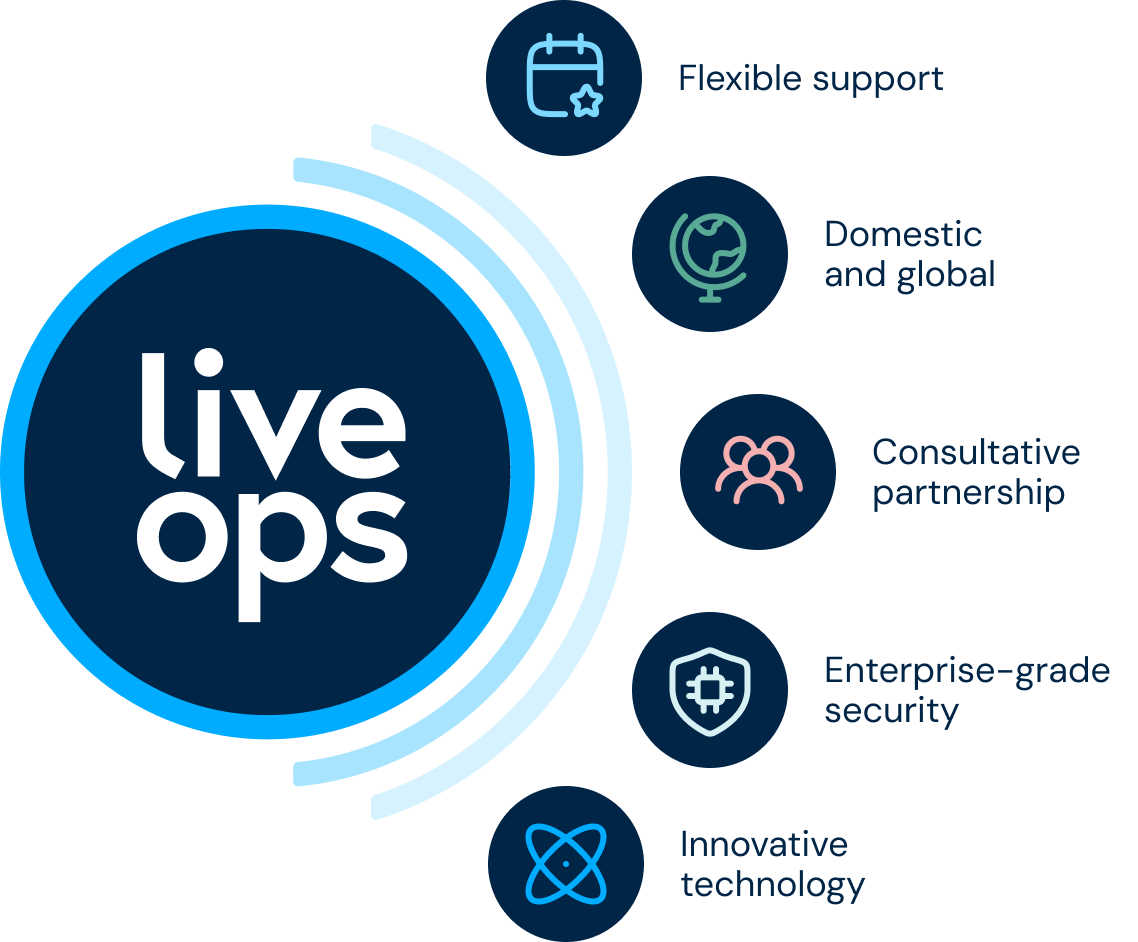
 Flexible support
 Domestic and global
 Consultative partnership
 Enterprise-grade security
 Innovative technology
Contact center outsourcing where empathy meets innovation
Liveops combines real human connection with AI-powered operations to deliver better customer experiences that move as fast as your business. For 25 years, we’ve helped brands scale with confidence through flexible customer service solutions designed to improve performance, strengthen consistency, and support growth. With a distributed contact center model and domestic and global delivery, Liveops helps organizations respond quickly, adapt easily, and deliver high-quality support at scale.
From steady-state service to moments of peak demand, we design right-fit solutions that reflect your brand, reduce friction, and create stronger customer connections. Our approach to virtual contact center outsourcing gives organizations the flexibility, precision, and operational support needed to meet changing demand without compromising quality.

Global services designed to scale with you
Whether you need to scale customer services, expand sales or technical support, or streamline back office operations, Liveops provides tailored solutions based on your call volumes to provide more precise support coverage, while enhancing quality every step of the way. Our flexible contact center outsourcing solutions are designed to help brands scale support efficiently across channels, teams, and geographies.

Offer responsive support across every touchpoint—voice, email, chat, and more. Our remote model helps you deliver brand-aligned customer care at scale.

Whether you’re launching a new product or expanding your reach, experienced agents drive results with on-brand conversations that engage and convert.

From troubleshooting to escalations, we provide knowledgeable, always-on support that strengthens trust and loyalty with every interaction.

Agents handle behind-the-scenes tasks—from order entry to administrative support—so your teams can focus on high-impact work.



Benefits with results
At Liveops, we’re built for what brands need most: scale, speed, and consistency—without compromising on care. Our model brings together experienced agents, adaptive technology, and a flexible delivery network that meets your customers where they are.
-
 Seasonal flexibility
Scale with ease for peak seasons with a flexible model built to handle surges—delivering fast, effective support while improving service quality.
-
 Precision scheduling
30-minute scheduled increments built for peaks and valleys, allowing you to ramp up for high-volume moments without overspending during slowdowns.
-
 Quality talent
Seasoned remote customer service agents are selected for brand alignment and customer care excellence.
-
 Total cost of ownership (TCO)
Reduce total cost of ownership with a flexible remote model—no facility costs, less overstaffing, and lower idle time and attrition expenses.
-
 Advanced AI and Automation
We integrate cutting-edge technology—from real-time AI insights to seamless automation—to streamline operations, enhance customer experience, and scale smarter.
Smarter service, stronger results
At Liveops, excellence is built into every interaction. We help leading brands deliver consistent results across complex environments, high-volume moments, and evolving customer expectations.
Our flexible contact center outsourcing solutions are designed to drive meaningful business outcomes while maintaining quality at scale.
1000%
flex to expected or unexpected events
25 years
pioneering our flexible outsourcing model
15%
average increase in CSAT
25-55%
average cost savings
Liveops Client Testimonial
Supporting Duke Energy with Speed, Scale, and Cost Efficiency
In this client testimonial, Keith Gindoff, Director of Vendor Management at Duke Energy, shares what makes Liveops a valuable partner.
He highlights Liveops’ cost-effectiveness, fast response times during emergency situations, and ability to scale support up or down based on Duke Energy’s needs.

 What OUR clients say
Liveops offers a level of staffing flexibility we haven’t seen elsewhere. The ability to ramp support up or down—even in 30-minute intervals—is a game changer for managing dynamic volume.
What OUR clients say
I’ve worked with Liveops for over 17 years. Their ability to flex capacity instantly—without recruiting, hiring, or training—is unmatched. They’ve always been my virtual contact center.
What OUR clients say
Liveops has been able to consistently attain 90%+ on both Customer Satisfaction and First Call Resolution in this first year of our partnership.
What OUR clients say
Liveops has all the tools you'd expect from a modern provider—WFM, SLAs, reporting. They’re fully equipped to act as a virtual center with all the operational tech built in.


Smart technology, smarter service
At Liveops, we believe technology should enhance human connection, not replace it. That’s why we embed AI, automation, and intelligent tools into every stage of the customer journey to reduce friction, improve performance, and support faster, more informed service delivery.
By pairing innovation with human expertise, we strengthen flexible customer service outsourcing solutions with greater visibility, smarter decision-making, and better outcomes at scale.
- AI-powered insights
Turn every conversation into actionable intelligence. We utilize AI tools to analyze interactions in real time—flagging compliance risks, surfacing quality issues, and identifying opportunities for improvement. - Automation that accelerates
Our processes automate the repetitive so agents and operations teams can focus on what matters most. From identity verification to post-call wrap-ups, we cut handle times and boost efficiency with ease. - Tech that works with people
We leverage technology designed to support the agent experience. With intuitive interfaces, knowledge tools, and smart workflows, agents are empowered to deliver better outcomes, faster.
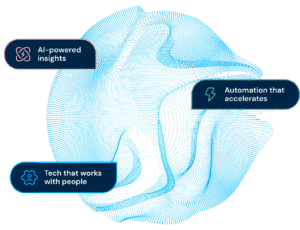

 AI-powered insights
 Automation that accelerates
 Tech that works with people
Experts in your field
Where others struggle, we scale. Liveops co-creates tailored support strategies that reflect your industry’s realities—delivering consistency, care, and quality in even the most complex, high-touch, and regulated environments.

Healthcare
Support patients with care, precision, and compliance—delivered by agents experienced in HIPAA-regulated environments.

Insurance
Handle complex, policy-driven interactions with licensed and non-licensed professionals ready to support your members throughout every season.

Retail
From peak season spikes to everyday inquiries, deliver seamless, scalable customer support that drives loyalty and retention.

Financial services
Deliver secure, on-brand service experiences with agents ready to meet the highest compliance and quality standards.

Travel and hospitality
Be ready for every booking, cancellation, and last-minute change with flexible solutions that keep guests happy and coming back.

Energy and utilities
Ensure dependable service during outages, billing cycles, and urgent updates with responsive, always-on support.

Communications
Manage high call volumes, technical inquiries, and account needs with agents equipped to handle fast-moving customer demands.

Government
Support constituents with secure, scalable communication services that meet public sector standards and evolving community needs.
Recognized for redefining service
A commitment to innovation, flexibility, and quality consistently earns Liveops recognition across the contact center industry. From customer service excellence to workplace culture, our awards speak to the people-first values behind every interaction.





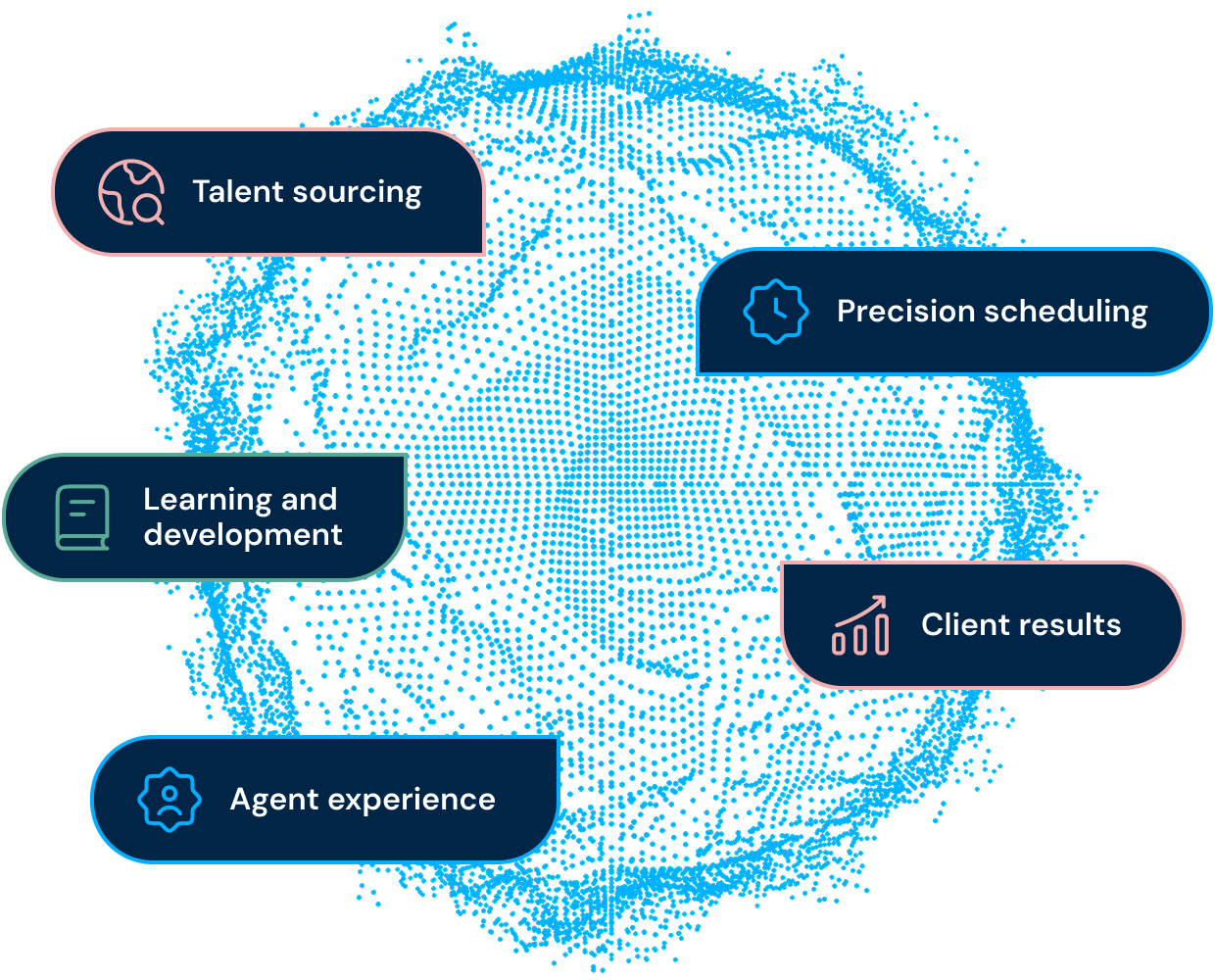
The framework behind every interaction

 Talent sourcing
 Learning and development
 Precision scheduling
 Client results
 Agent experience
Talent sourcing
We find the right people for your brand. Our talent sourcing model combines AI-driven screening with hands-on evaluation to match each program with agents who bring proven industry experience and professionalism from the start.
Learning and development
Agents don’t just get certified—they’re built for your brand and ready to perform. Our immersive self-paced certification programs include simulations, brand immersion, and vertical-specific content to reduce ramp time and speed to proficiency.
Precision scheduling
Support is calibrated in real time to match your service needs. Our precision scheduling model uses 30-minute intervals and AI-powered forecasting to meet changing demand without overcommitting or underdelivering.
Client results
You’re backed by a dedicated team focused on performance. Our Client Results Team partners with you to monitor KPIs, guide improvements, and ensure service delivery stays aligned with your goals.
Agent experience
Liveops is the only flexible BPO partner with a dedicated team focused on agent experience. From real-time sentiment insights to milestone celebrations and peer connection programs, we empower agents so they can show up for your customers—consistently, and with care.
Frequently Asked Questions
Q1. What is Liveops?
Liveops is a flexible contact center outsourcing provider giving enterprises access to a network of certified, independent contractor agents for outsourced customer support. It replaces fixed in-house teams and traditional BPO contracts with a flexible contact center built on a virtual contact center platform.
Because capacity is on-demand rather than seat-based, businesses pay for active on-demand customer service, not idle headcount. That network delivers customer support outsourcing services across voice, chat, email, and back office.
Q2. How does the Liveops model work?
Liveops operates differently from most customer service outsourcing companies: agents are matched to a brand and industry, certified on that client’s protocols, then deployed as a managed extension of the client’s CX team. This outsourced contact center model gives enterprises flexible customer service that scales without a fixed facility.
LiveNexus, Liveops’ AI platform, gives agents real-time guidance during interactions, while clients keep visibility through call recording and quality reporting. Businesses researching how to outsource customer support get this managed outsourced support model without giving up oversight.
Q3. What types of customer support does Liveops handle?
Virtual contact center services from Liveops span voice, chat, email, and back-office work, with inbound voice as the largest channel by volume. This omnichannel customer support outsourcing model lets enterprises consolidate multiple contact types into one flexible agent network instead of managing separate vendors per channel.
Agents specialize by channel and complexity rather than working as generalists. Retail programs draw on Liveops’ outsourced live chat support services and email support outsourcing specialties; others handle back office outsourcing tasks like claims processing and data entry; and others are certified for white-glove support on complex cases.
Q4. Does Liveops support live chat and digital channels, or only phone calls?
Liveops supports live chat and digital messaging alongside voice, so businesses aren’t limited to phone-only outsourcing. Enterprises can outsource live chat support services as a standalone channel or combine them with voice, email, and text under one program.
Live chat outsourcing is a priority for retail and ecommerce brands, where chat is often the primary contact channel. Outsourced live chat and other digital customer support outsourcing channels follow the same certification and quality standards as voice. That holds whether a client needs chat support outsourcing services alone or wants to outsource chat support as part of a broader program.
Q5. What industries does Liveops specialize in?
Insurance, financial services, retail and ecommerce, healthcare, and technology make up Liveops’ deepest areas of expertise, especially in regulated industries. Unlike generalist contact center outsourcing companies running every brand through the same script, Liveops certifies agents on each client’s specific products and regulatory requirements.
Insurance outsourcing services and financial services BPO programs need agents fluent in policy language and licensing rules that vary by state. Retail outsourcing services and ecommerce customer service outsourcing programs focus on order management and seasonal swings. Healthcare customer support outsourcing programs handle patient-facing interactions requiring accuracy and care.
Q6. Can Liveops support ecommerce customer service?
Yes. Liveops is built for ecommerce call center outsourcing, with agent capacity that flexes to match the volume swings common in online retail. Brands that outsource ecommerce customer service through Liveops get support across order management, returns, product inquiries, and loyalty programs.
Ecommerce customer service outsourcing volume can run three to five times higher during peak periods than during slower stretches. Liveops’ contractor network absorbs that swing because capacity is on-demand, a core advantage of the ecommerce outsourcing model over retail outsourcing built on fixed staffing. Ecommerce outsourcing services also include agents certified on a brand’s catalog and return policies.
Q7. How quickly can Liveops scale customer support capacity?
Liveops delivers scalable contact center outsourcing, with capacity that activates in days, not months, because its pre-certified agent network already exists. Agents already certified on a client’s program pick up shifts through Liveops’ precision scheduling system as volume rises, without a new scheduling cycle.
On-demand contact center agents through Liveops have supported product recalls, acquisition-driven surges, disaster response, and predictable peak season call center outsourcing needs like tax season and holiday retail. Because there’s no facility to lease, capacity changes through scheduling, not construction, unlike customer service outsourcing companies built on fixed-seat staffing.
Q8. Does Liveops work for businesses with fluctuating or seasonal volume?
Yes, fluctuating and seasonal volume is one of the strongest use cases for the Liveops model. Seasonal customer service outsourcing through Liveops means paying for productive agent time during actual demand, not carrying fixed headcount that sits idle in the off-season.
Flexible customer support suits businesses with predictable but uneven demand: retail brands managing holiday peaks, tax services during filing season, and insurers handling open enrollment. An on-demand contact center model absorbs peak volume customer service spikes without the lead time an in-house buildout requires. For businesses evaluating customer support outsourcing, this is where scalable contact center solutions matter most.
Q9. How much does it cost to outsource customer service with Liveops?
Customer service outsourcing cost with Liveops is structured around volume, channel mix, program specialization, and outcomes based pricing rather than a fixed per-seat rate. Outsourced customer support pricing scales with what a program needs, not a flat fee regardless of call volume.
Call center outsourcing rates vary by industry and complexity: a licensed insurance program costs differently than a retail chat queue. Compared with in-house staffing or fixed-seat BPO contracts, the cost to outsource customer support with Liveops is typically lower on total cost of ownership. Because pricing among customer support outsourcing companies depends on program details, a discovery conversation comes first.
Q10. How do I get started with Liveops, and how long does implementation take?
Most Liveops clients move from initial conversation to live support within weeks, not months. Program design, agent certification, and go-live make up the outsourced customer service implementation process at Liveops, with no physical facility to build along the way.
Contact center outsourcing onboarding starts with a discovery conversation to define channel mix, volume, and industry requirements. From there, customer support outsourcing setup includes matching and certifying agents on the client’s products and systems before any live interactions begin. For businesses researching how to start outsourcing customer service, an outsourced contact center launch with Liveops takes significantly less time than a traditional BPO launch, because there’s no lease to sign.
Stop outsourcing, start outsmarting
Join the brands redefining customer experience with Liveops. Empathetic agents, tech-powered delivery, and the flexibility to meet every moment. Let’s talk.

Explore flexible customer experience solutions