
The Liveops 2025 Holiday AI & Customer Service Report
minutes

How AI shaped the holiday shopping experience for 78% of consumers
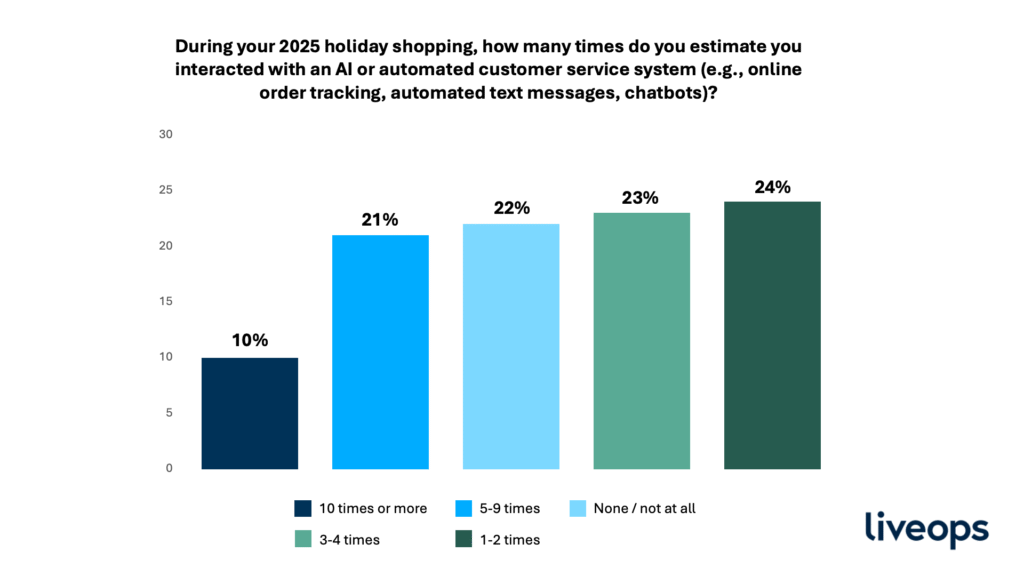
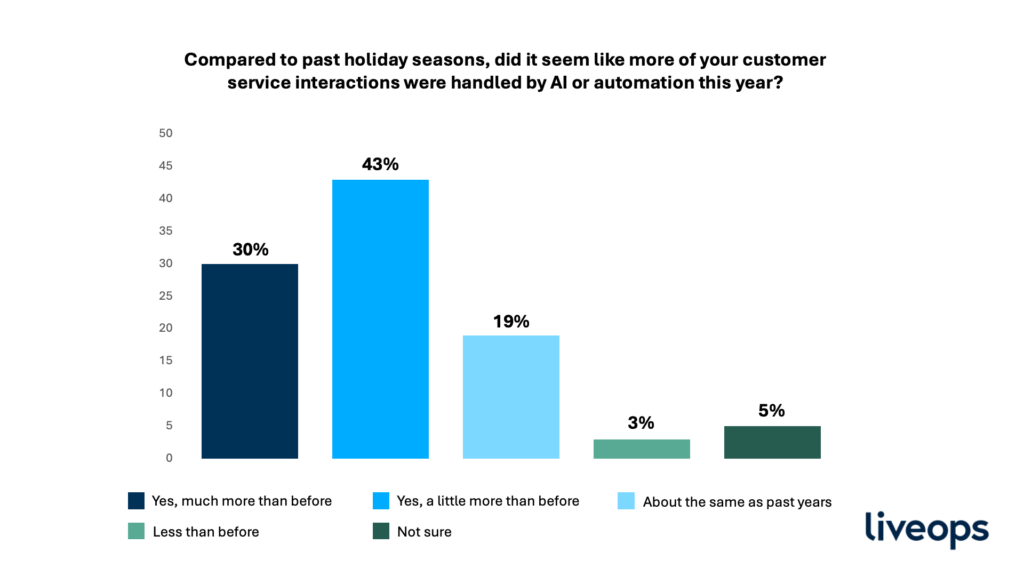
The 2025 holiday rush became the first truly AI-powered shopping season, with nearly 8 in 10 (78%) shoppers interacting with artificial intelligence at some point in their experience. And for a majority, 73%, this represented a noticeable increase from previous years. Together, these findings mark a turning point: AI moved from a supporting role to a defining feature of the holiday customer service journey.
According to the Liveops 2025 Holiday AI & Customer Service Report, shoppers encountered AI or automation through chatbots, automated texts, delivery tracking updates, voice assistants, and self-service return portals. For many, this was their first real experience with AI-driven retail support, which made service faster, but not always better.
“Consumers made one thing clear: the future of retail isn’t about maximizing automation, it’s about elevating the quality of every interaction,” said Molly Moore, COO of Liveops. “AI should clear the path, and people should carry the relationship. Companies that design AI around trust, transparency, and empathy will lead the next era of customer experience.”
Purpose of This Study
Liveops, the leader in AI-powered flexible customer experience outsourcing solutions, conducted this survey to explore how artificial intelligence shaped consumer interactions during the busiest retail season of the year. The study examined whether automation elevated or diminished the quality of customer service.
The survey, conducted with the third-party platform Pollfish in November, captured responses from 1,000 U.S. adults aged 18+ who had completed all or most of their 2025 holiday shopping. The goal was to understand how shoppers perceived AI’s role in service quality, trust, and transparency. The findings reveal both enthusiasm and frustration, a portrait of consumers who want technology to help, but still expect humanity to lead.
Key Findings
Top takeaways from the survey include:
- Record AI Use Defined the 2025 Season: 78% of shoppers interacted with AI or automation, and 73% used it more often than in 2024.
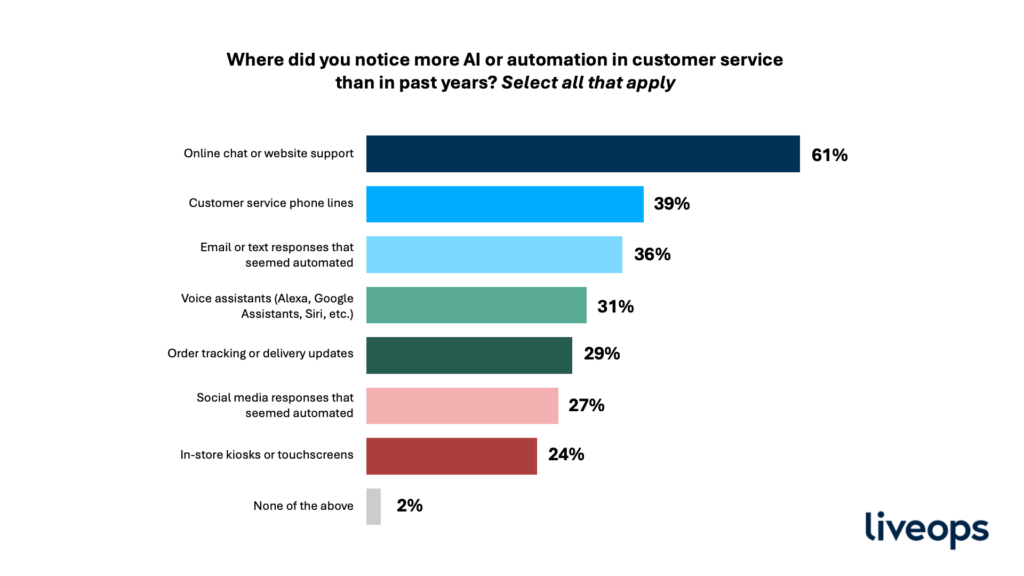
- Shoppers Saw the Biggest Spike in Digital Support: Consumers reported the most noticeable increase in automation in online chat and website help (61%), followed by customer service phone lines (39%) and automated emails, texts, and voice assistants (31-36%).
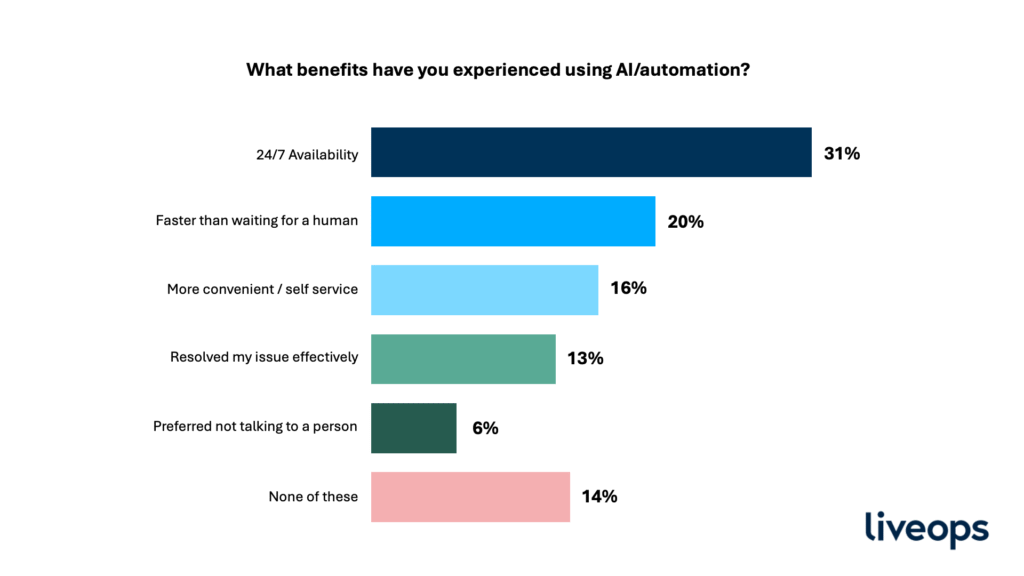
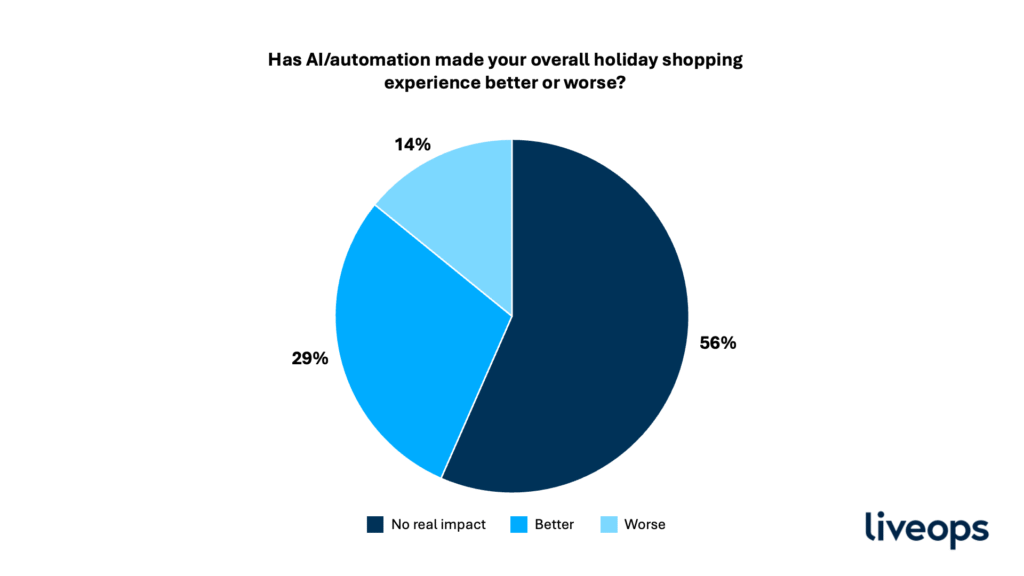
- AI Elevated the Experience for Many: 85% of respondents said AI sped up service and made it more accessible, and shoppers were twice as likely to report an improved holiday experience (29%) than a worse one (14%).
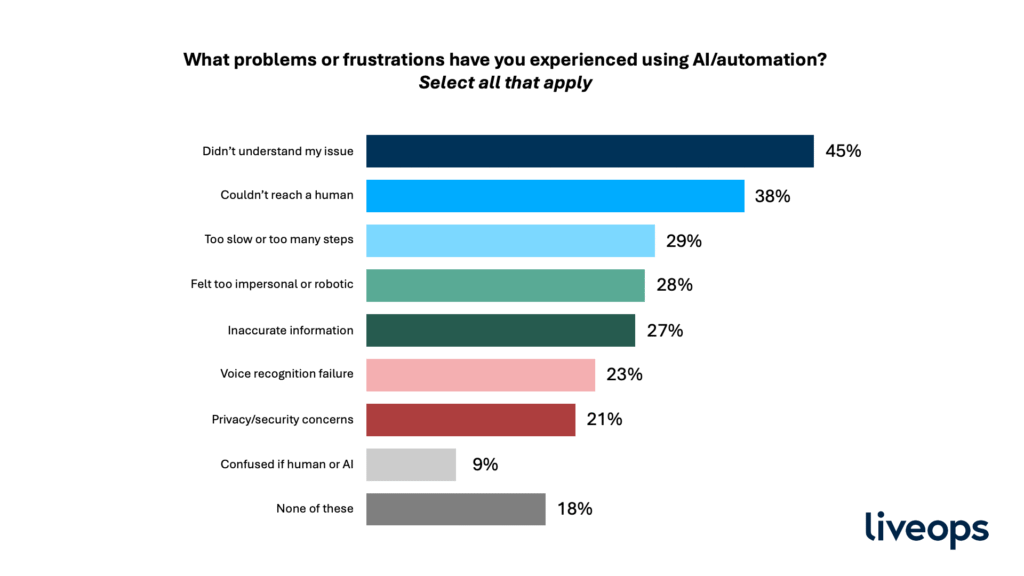
- Human Agents Still Outperformed AI: 54% said humans delivered better service than AI, 55% had to escalate an AI-handled issue to a human, and 45% said AI failed to understand their problem.
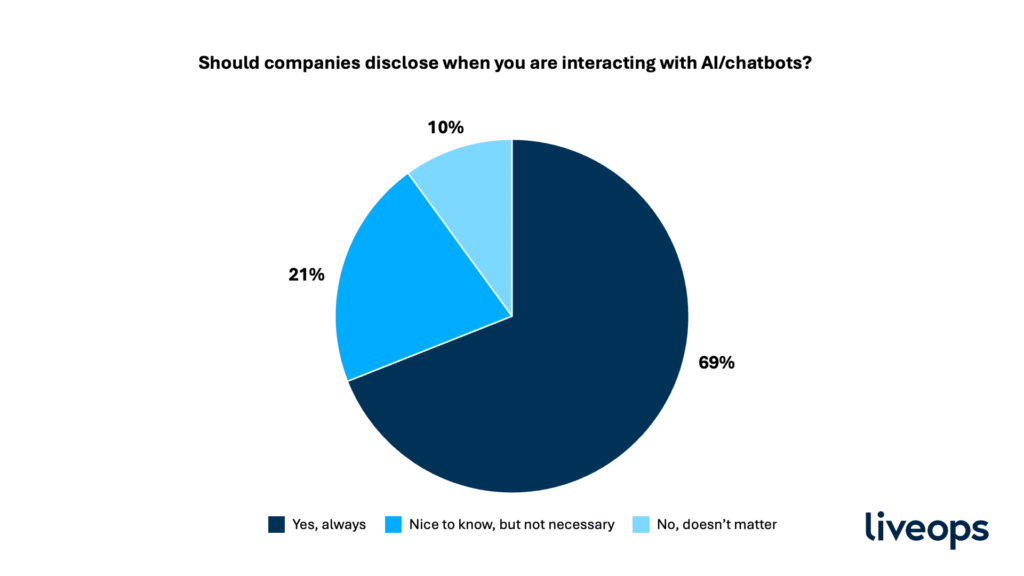
- Transparency Remains a Weak Point: Only 22% said companies clearly disclosed when AI was used, and 69% said they believe brands should always reveal it.
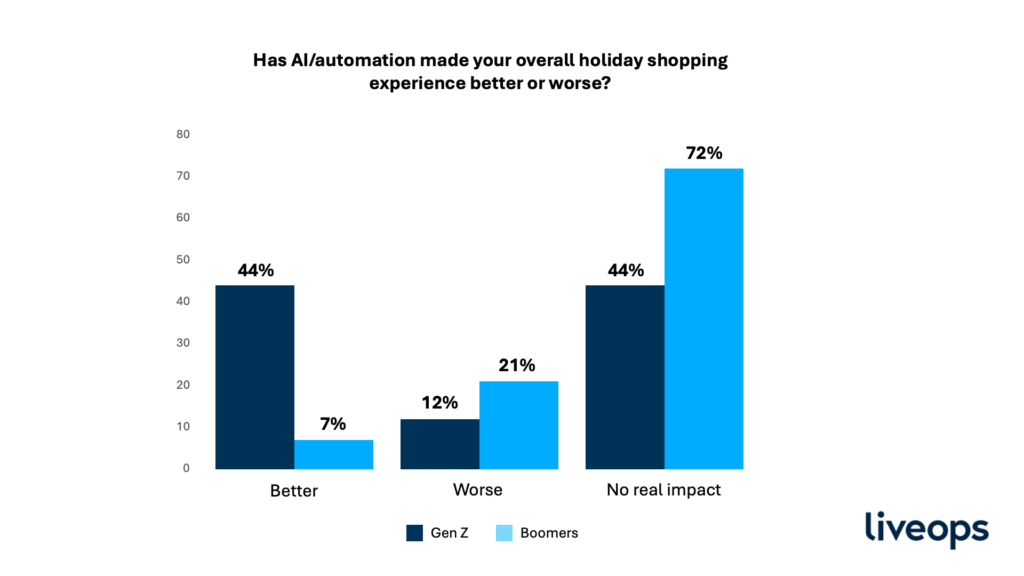
- AI Use Varied Sharply by Generation: 89% of Gen Z used AI during holiday shopping, compared to 60% of Boomers.
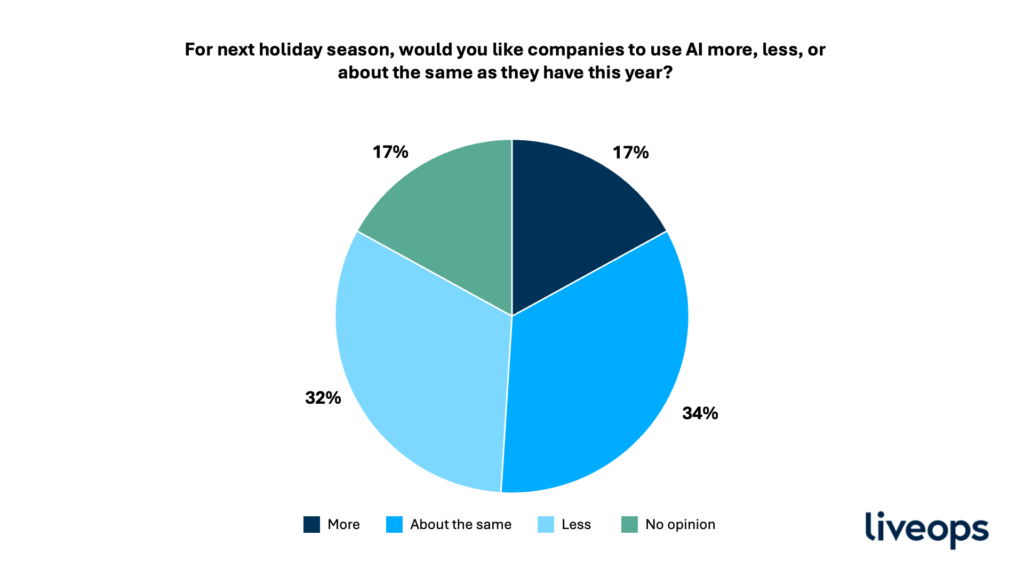
- Most Consumers Don’t Want More AI Next Year: Despite reporting positive AI experiences overall, consumers fear the future; only 17% want companies to increase their use of AI, while 32% want less.
AI Usage Became Nearly Universal This Holiday Season
This was the year automation stopped being a novelty and became the norm. AI quietly became the backbone of the 2025 holiday experience, operating behind nearly every digital interaction.
Approximately 78% of shoppers said they interacted with AI in some form, whether through delivery notifications, return systems, or virtual assistants. And 73% of this group said the interactions were more frequent than previous holiday seasons, including 30% who described their experiences with AI as “much more” frequent.
For many consumers, this was their first fully AI-driven season, one where human contact took a backseat to automated efficiency. What stood out most this season wasn’t the rise in AI; it was the rise in expectations. Consumers don’t want more automation; they want better automation. Speed matters, but intelligence, transparency, and emotional nuance matter more. The findings show a clear shift from “How much AI is being used?” to “How well is AI being used?” – a distinction that will define the next era of customer experience.
AI Took Over the Front Lines of Customer Service
Shoppers saw AI concentrated in the places where support matters most. The biggest surge appeared in online chat and website help (61%), closely followed by 39% reporting increases on customer service phone lines. With automated emails, texts, and voice assistants also rising, shoppers found themselves surrounded by AI across nearly every channel they turned to for help.
From order tracking and delivery updates to in-store kiosks and social media responses, shoppers encountered automation in places that were once entirely human-led. These shifts show that AI is no longer a support tool for companies. It’s becoming the front door.
Shoppers Report Faster Service, but Limited Improvement in Experience
AI delivered on its promise of speed, with 85% of holiday shoppers citing clear benefits on this front, from 24/7 availability to faster responses. For shoppers used to long queues or limited call center hours, the difference was tangible. While perceptions of overall experience were mixed, respondents were more than twice as likely to say AI improved their holiday experience (29%) than to say it made it worse (14%).
But speed isn’t synonymous with satisfaction. Consumers are telling retailers that the next wave of AI innovation shouldn’t focus on moving faster; it must focus on moving smarter. They want systems that understand context, respond with clarity, and escalate to humans when empathy is required. Quality, not quantity, is the new benchmark for automation.
Empathy Remains AI’s Weakest Link in Customer Service
Even as AI becomes more capable, customers continue to prefer human support when issues arise. More than half (54%) said humans provided better service, while only 11% credited AI.
This finding highlights AI’s greatest limitation: it struggles to feel. When a package goes missing, a gift arrives damaged, or a billing error disrupts the holidays, empathy becomes the differentiator. Human agents can listen and convey care through tone. Those are skills that algorithms, for now, can only mimic.
For brands, this means the best experiences will come from hybrid models, where automation handles routine tasks, and people handle relationships.

Escalation Rates Reveal Frustration with Automation
A key goal of AI is to make service simpler and more efficient, but in many cases, it can also lead to frustration. More than half (55%) of shoppers said they had to escalate an AI-led issue to a human, and 45% said the technology didn’t understand their problem.
This growing dissatisfaction has led to what’s known as AI fatigue, a type of digital exhaustion that sets in when customers feel trapped in loops of unhelpful automation. Instead of saving time, automation often turns convenience into aggravation.
AI fatigue is a response to poor execution rather than a rejection of technology. Customers want tools that listen and resolve efficiently without erasing care. When bots become barriers instead of bridges, even the fastest technology hurts the customer experience.
Gen Z Leads AI Usage while Boomers Remain Skeptical
AI adoption isn’t equal across generations. A large majority of Gen Z shoppers (89%) used AI this season, compared to 60% of Boomers. Nearly half (44%) of Gen Z said AI made their experience better, while only 7% of Boomers agreed.
These generational divides emphasize that personalization is the new frontier of customer service. Retailers must build systems flexible enough to serve both digital natives who expect instant responses and traditional shoppers who value human-centric contact.
The brands that succeed will blend both, designing experiences that feel efficient without losing their human soul.
Lack of AI Transparency Undermines Customer Confidence
Many shoppers often didn’t realize when they were talking to a machine. Only 22% of respondents said companies always disclosed when AI was being used, and 69% said they believe brands should always reveal it.
That lack of clarity undermines confidence. When customers feel deceived, even unintentionally, it chips away at credibility. The takeaway is that transparency is a requirement, not a courtesy.
Brands that are upfront about when and how they use AI will earn trust faster than those that hide it. Consumers don’t mind automation, but they do mind being misled.
Demand Shifts Toward Quality, Not Quantity, of Automation
After a season of mixed experiences, consumers are calling for better automation instead of more or less automation. Only 17% want companies to use AI more next year, while nearly twice as many (32%) want less.
This doesn’t signal a rejection of technology; it’s a call for refinement. The brands that win customer loyalty are those that understand that consumers want better AI, not more AI. Building AI that feels intuitive and genuinely helpful is the key to success.
Customer Loyalty Hinges on Transparency and Human-Centered AI
The 2025 holiday season made one truth impossible to ignore: AI can make service faster, but not necessarily better. Automation brought new levels of convenience and responsiveness, yet it also exposed that customers still crave empathy, transparency, and understanding the most.
Consumers want AI to evolve. They’re asking companies to combine digital speed with emotional intelligence and use technology as a way to make both employees and customers feel more supported.
The lesson for brands heading into 2026 is simple. Technology alone doesn’t define great service; trust does. Companies that design AI systems around the values humans appreciate will set the new gold standard for customer experience.
“Shoppers aren’t rejecting AI, they’re rejecting bad AI,” said Moore. “Simultaneously, technology shouldn’t eliminate people, but should augment them. The companies that blend innovation with empathy will pave the way for exceptional service.”
Recommendations for Retailers: How to Use AI the Right Way in 2026
The findings reveal a retail landscape that isn’t rejecting automation; it’s demanding better automation. Based on consumer sentiment and Liveops’ experience supporting major retail brands, here are key recommendations for retailers looking to improve the customer experience in 2026:
Prioritize “quality of AI” over “quantity of AI”: Consumers don’t want more AI, they want AI that works. Focus your efforts on accuracy, personalization, emotional intelligence, and context awareness. AI should feel like a helpful guide, not a hurdle.
Use AI to clear the path, not control the journey: AI is ideal for order status, returns, basic troubleshooting, identity verification, and transactional interactions. But the moments that matter – billing issues, damaged orders, complaints, gift-related mistakes – require empathy and judgement. Give those to experienced human agents.
Embed transparency into every interaction: Consumers overwhelmingly want to know when they’re talking to AI. Retailers should clearly disclose the use of AI, make handoffs seamless, and allow customers to opt out of bots. Trust is built through clarity.
Personalization is key: Build a flexible, hybrid service model. Different consumers want different things: Gen Z wants speed and efficiency; Boomers want assurance and real connections. Retailers need AI-led pathways for simple tasks and human-led pathways for complex, emotional, or high-value issues. Combining intelligent automation with experienced and flexible agents is key.
Treat AI as a partner to agents, not a replacement: AI can prepare customer context, suggest language, provide compliance guardrails, draft notes, and summarize. This lifts quality and consistency across large-scale operations without sacrificing human warmth and empathy.
The data makes one thing unmistakably clear: shoppers are ready for AI, but they’re no longer impressed by automation alone. The lesson for brands heading into 2026 won’t be to automate the most, but to automate the smartest. Consumers are asking for intelligence, empathy, and transparency, and retailers who combine responsible AI with human expertise will lead the next era of customer experience.
Survey Methodology
Liveops used the third-party survey platform Pollfish to conduct an online survey in November 2025 of 1,000 U.S. adults aged 18+. Respondents must have completed all or the majority of their holiday shopping to be selected for research. Researchers reviewed all responses for quality control.


Let’s connect
Sales reps are available to help you meet your customer service needs with greater flexibility, lower cost, and better outcomes.
Related Resources

Why Bilingual Customer Service Jobs Are One of the Fastest-Growing Opportunities Today →

Human-First CX in a Tech-First World →

When and How Energy Providers Should Scale Operations →
Stop outsourcing, start outsmarting
Join the brands redefining customer experience with Liveops. Empathetic agents, tech-powered delivery, and the flexibility to meet every moment. Let’s talk.

Explore flexible customer experience solutions