
What the 2026 AI Maturity Benchmark Reveals About the Future of CX
minutes

Artificial intelligence is reshaping customer experience, but enterprise leaders are making one thing clear: the future of CX isn’t AI alone. It’s AI and human judgment working together.
That’s one of the biggest takeaways from the Liveops 2026 AI Maturity Benchmark for Customer Experience, developed in partnership with Peter Ryan Strategic Advisory. The report surveyed 815 enterprise executives with strategic decision-making authority over contact centers across global markets, industries, and revenue bands.
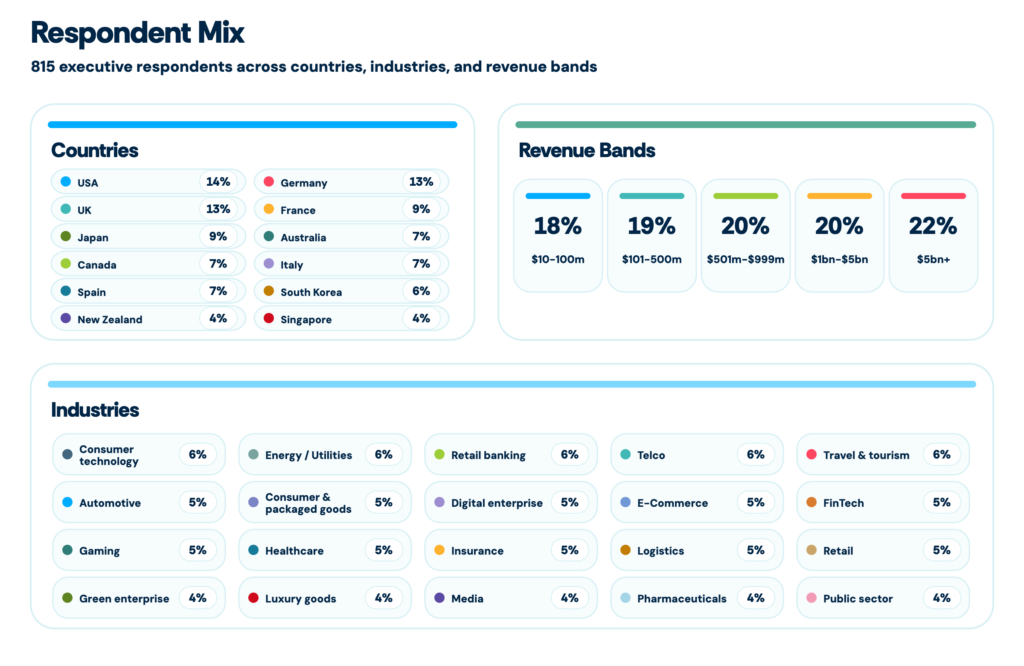
The research examined how organizations are approaching AI maturity in CX, which delivery models they believe create the strongest outcomes, and what barriers are slowing transformation. The findings point to a market that’s moving forward, but not evenly.
Download the full AI maturity benchmark whitepaper
AI Maturity is Advancing, But Most Organizations Haven’t Reached Full Optimization
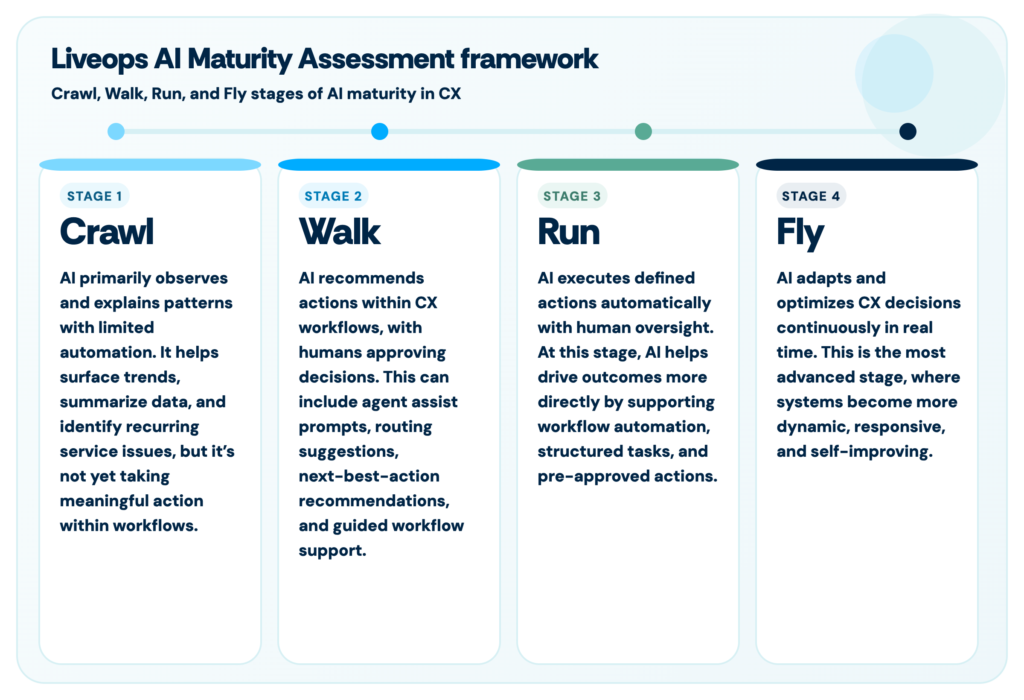
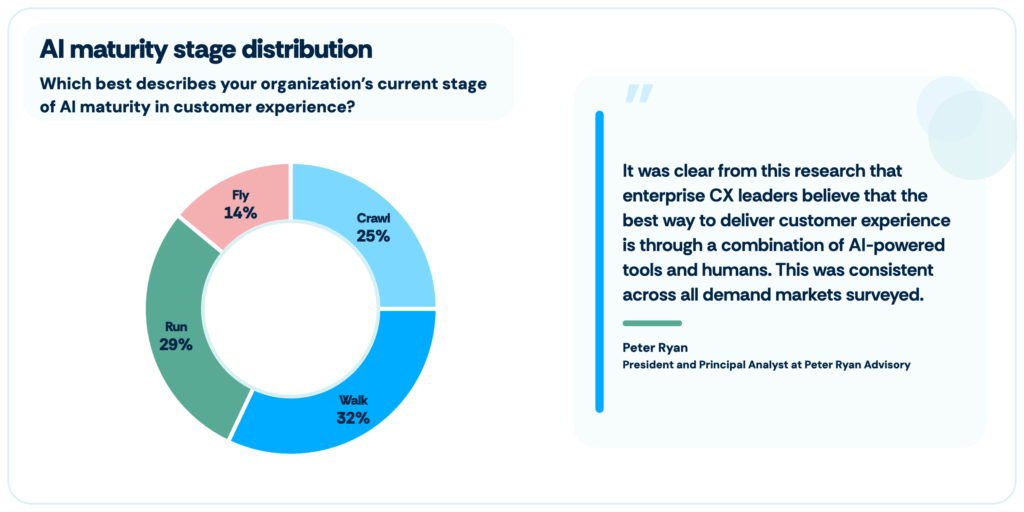
Across the full survey sample, organizations placed themselves across four stages of AI maturity:
Crawl: 25%
Walk: 32%
Run: 29%
Fly: 14%
This distribution shows that most enterprises have moved beyond the earliest stage of AI adoption, where AI primarily observes patterns, summarizes data, or identifies service trends. Many are now using AI to recommend actions, support workflows, or automate defined tasks with human oversight.
But only 14% say they’ve reached the Fly stage, where AI adapts and optimizes CX decisions continuously in real time. That gap matters. It shows that while AI adoption is accelerating, true AI maturity remains out of reach for most organizations today.
The largest share of respondents sit in the Walk and Run stages, which suggests many enterprises are actively embedding AI into CX operations but still relying on human review, governance, and oversight to manage quality and risk.
Want to see where your organization falls on the AI maturity curve? Take the Liveops AI Maturity Assessment to benchmark your current stage and identify practical next steps for moving forward.
Take the AI maturity assessment
The Path to AI Maturity Looks Different Across Markets and Industries
The research also shows that AI maturity isn’t progressing at the same pace everywhere.
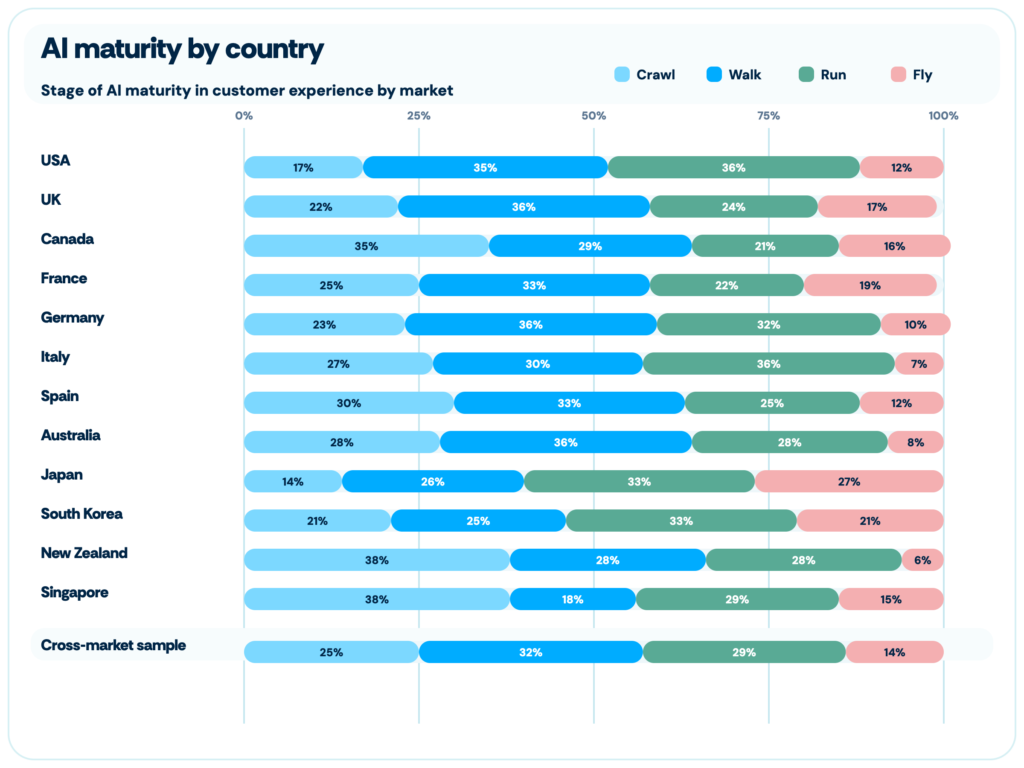
Some countries, including Japan and South Korea, showed stronger concentrations in more advanced stages of maturity. Others, including Canada, Spain, New Zealand, and Singapore, showed higher concentrations in the Walk stage, suggesting steady momentum but a more measured pace of adoption.
Industry differences were just as important.
Gaming led in advanced AI maturity, with 61% of organizations operating in Run or Fly. FinTech, Digital Enterprise, and Media followed at 58%, while E-Commerce and Retail Banking also showed strong advancement.
Other sectors remain more concentrated in earlier stages. Public Sector had the highest Crawl concentration at 47%, followed by Green Enterprise at 44%, Energy and Utilities at 43%, and Pharmaceuticals at 39%.
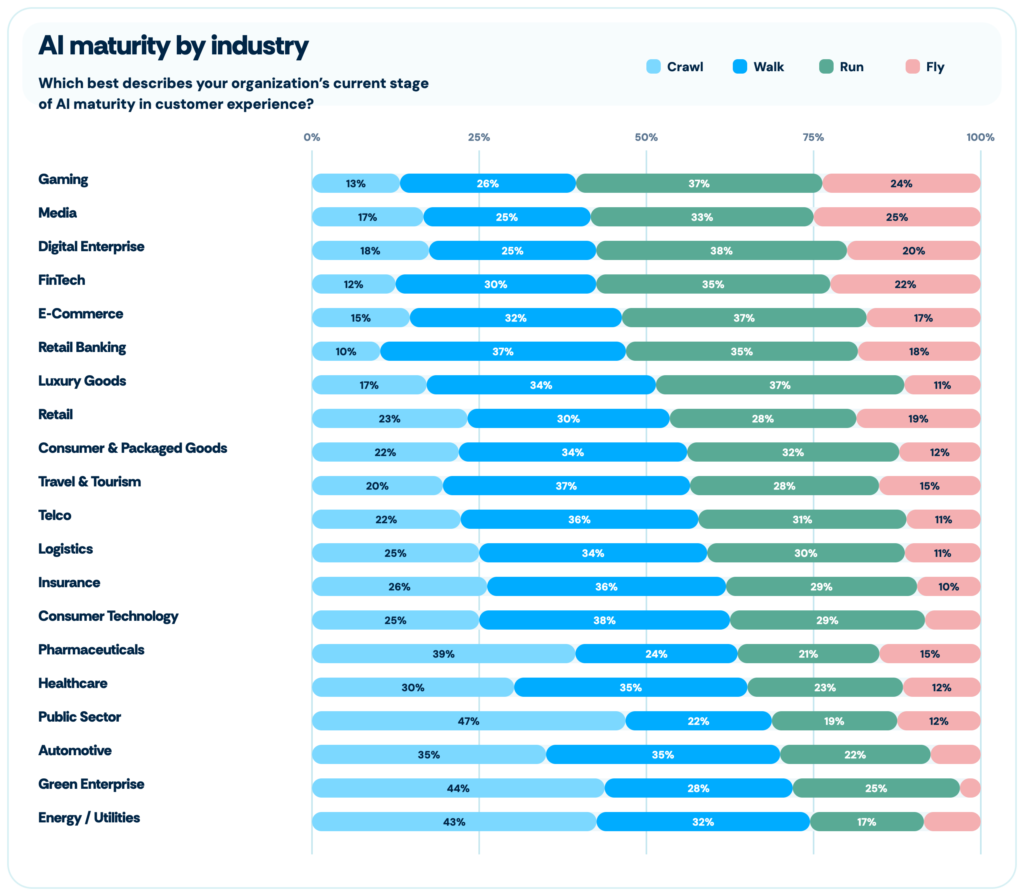
These differences suggest AI maturity isn’t shaped by ambition alone. It’s also influenced by market conditions, regulatory requirements, investment priorities, operational readiness, and risk tolerance.
Hybrid AI and Human Models are the Clear Preference
One of the most important findings in the report is also one of the clearest: enterprise leaders overwhelmingly favor a hybrid model for CX delivery.
Across the survey sample, 73% of respondents said a model combining AI and human judgment delivers the strongest customer experience outcomes today. By comparison, 21% selected human-only support, while just 6% selected AI-only automation.
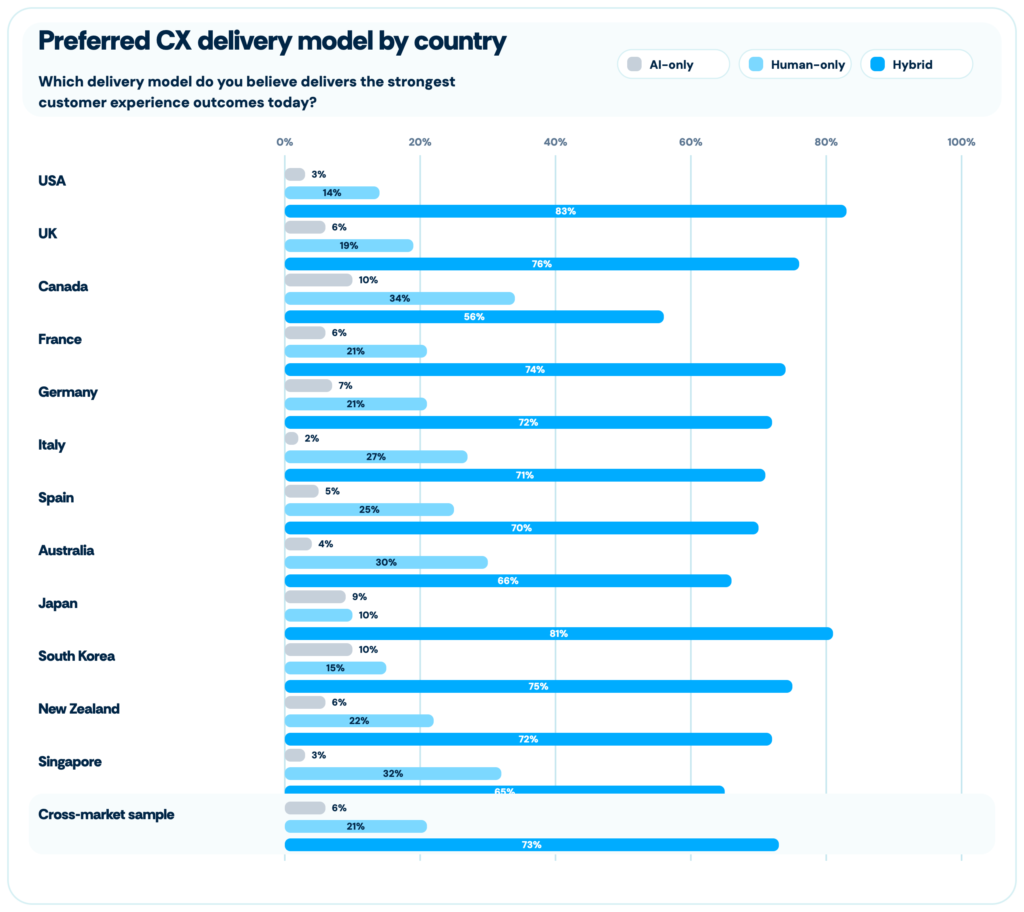
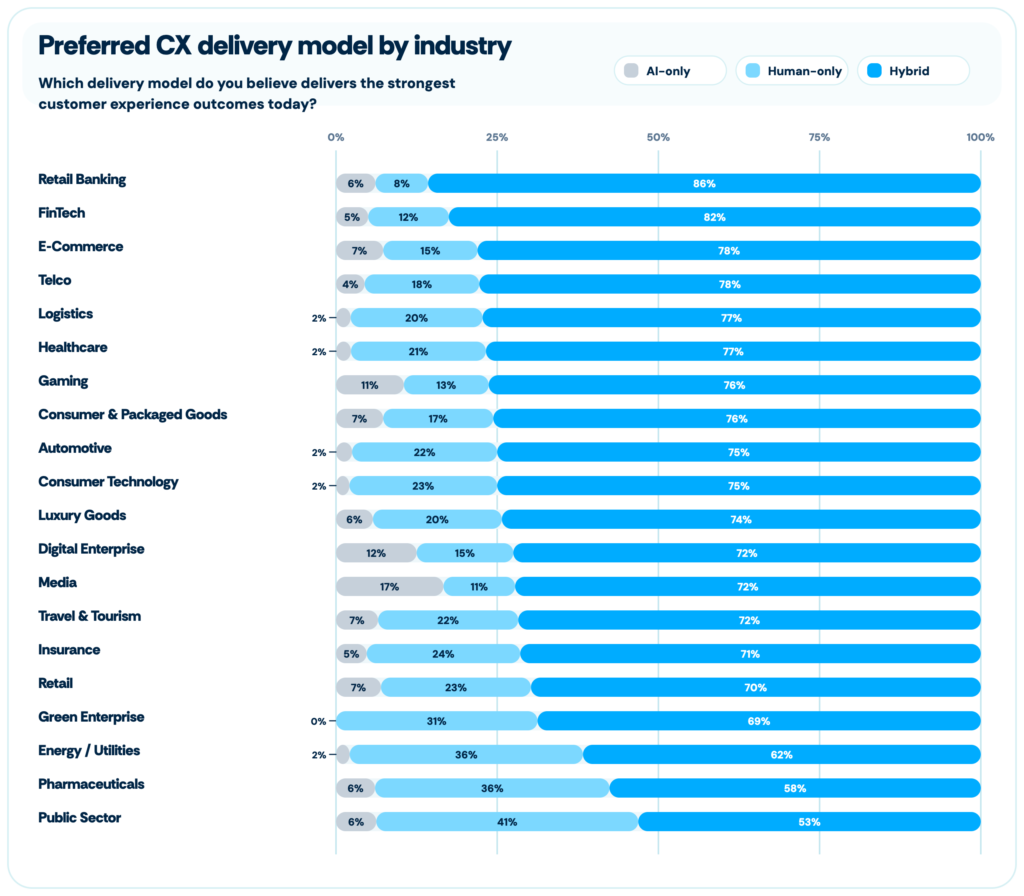
That margin is significant.
It shows that while organizations increasingly value AI, they’re not looking to remove people from customer experience altogether. Instead, they see the strongest outcomes coming from a model where AI improves speed, insight, consistency, and efficiency, while humans provide empathy, context, accountability, and exception handling.
As AI becomes more embedded in CX operations, the question isn’t whether humans still matter. The question is how effectively organizations can orchestrate AI and human judgment together.
The Biggest Barriers are Now About Execution
The research also revealed that the barriers slowing CX transformation have shifted.
When respondents were asked which factors most slow down or complicate CX transformation initiatives, change management and workforce readiness ranked highest, with an average score of 3.7 out of 5. Data security and compliance followed at 3.6, internal alignment and ownership at 3.5, cost and ROI uncertainty at 3.4, and immature AI technologies at 3.2.
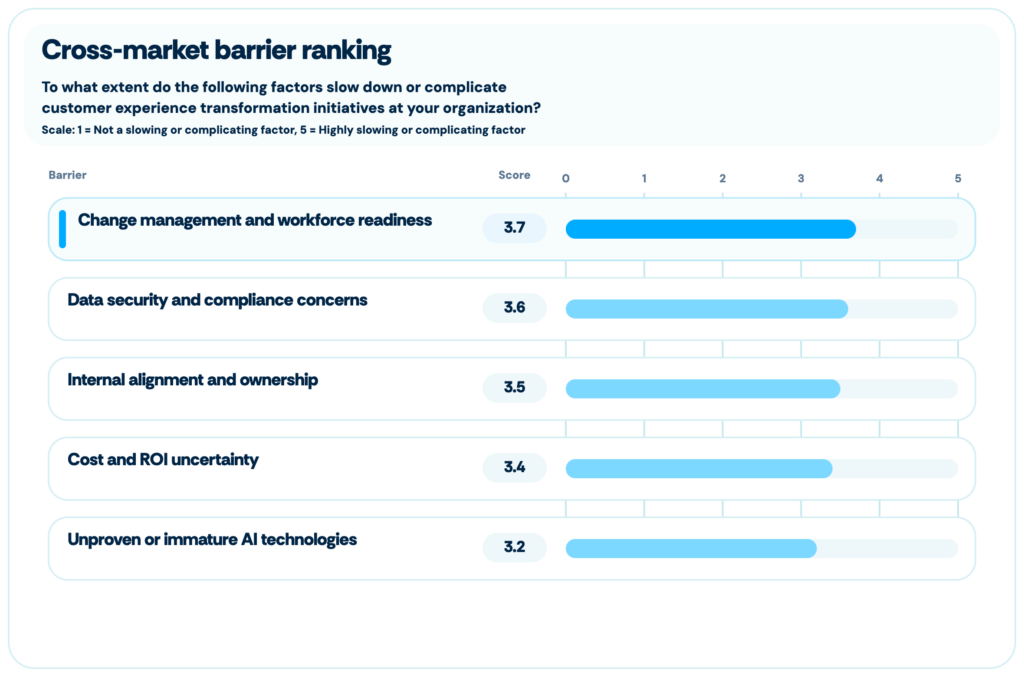
This matters because it shows enterprise concerns are evolving. AI capability still matters, but it’s no longer the top issue. Leaders are now more focused on whether their organizations have the right people, processes, governance, and operating models in place to apply AI successfully.
In other words, the challenge isn’t just adopting AI. It’s operationalizing it.
What CX Leaders Should Do Next
The findings point to a more practical view of AI in customer experience. Enterprises want progress, but they want it with control. They want innovation, but they also want accountability. They want AI to improve CX, but not at the expense of trust, quality, or operational resilience.
For leaders evaluating the next stage of AI transformation, several priorities stand out.
Treat Hybrid as the Operating Model
Hybrid AI and human delivery shouldn’t be viewed as a temporary step on the way to full automation. For many organizations, it’s the model most likely to deliver stronger CX outcomes at scale.
AI can support speed, consistency, and insight. Human judgment remains essential for complex interactions, emotional nuance, compliance-sensitive moments, and exceptions that don’t fit neatly into an automated path.
Build AI Maturity Intentionally
Organizations don’t reach advanced AI maturity by adding more tools. They progress by applying AI to the right use cases, defining where humans need to stay in the loop, building governance early, and expanding automation only when the operating model is ready.
That means maturity should be measured by outcomes, not just AI adoption.
Focus on Readiness, Ownership, and Governance
The top barrier identified in the research was not AI immaturity. It was the organization’s ability to prepare teams, align stakeholders, and manage change.
That makes workforce readiness, cross-functional ownership, quality controls, and governance just as important as the technology itself.
The Future of CX Depends on Orchestration
The 2026 AI maturity benchmark makes one thing clear: success won’t come from adopting AI faster than everyone else. It will come from integrating AI into a governed operating model that brings together human expertise, data, automation, and accountability.
For CX leaders, the goal isn’t to chase automation for its own sake. It’s to apply AI where it can create measurable value while keeping trust, quality, and human judgment at the center of the customer experience.
As organizations move from Crawl to Walk, Run, and Fly, the winners won’t simply be those using AI. They’ll be the ones using it with discipline, clarity, and purpose.
Ready to benchmark your CX AI maturity?
Schedule your 1:1 AI consultation with Liveops to assess where your organization stands today, identify the right AI use cases, and build a practical path toward measurable CX impact.


Let’s connect
Sales reps are available to help you meet your customer service needs with greater flexibility, lower cost, and better outcomes.
Related Resources

Gen Z, AI, and the New Rules of Customer Service →

Agent Spotlight: Merissa, Building Success Around What Matters Most →
Stop outsourcing, start outsmarting
Join the brands redefining customer experience with Liveops. Empathetic agents, tech-powered delivery, and the flexibility to meet every moment. Let’s talk.

Explore flexible customer experience solutions